
Buying a nice set is easy, but if the board and pieces do not match, the game is uncomfortable: the pieces do not fit the squares or get lost on a large board. In this article, we have gathered the essential numbers needed to choose the correct size.
What Does FIDE Recommend?
The main indicators for tournaments in the equipment standards of the International Chess Federation (FIDE) are:
- Square size: 5–6 cm.
- King's height: approximately 8,5–10,5 cm (the most common size is around 9,5 cm).
- King's base diameter: about 40–50% of its height.
- Ratio between square and pawn: the side of the square must be at least twice as large as the base diameter of the pawn.
In simple terms: pieces must stand freely inside the square and not "spill over" into neighboring squares.
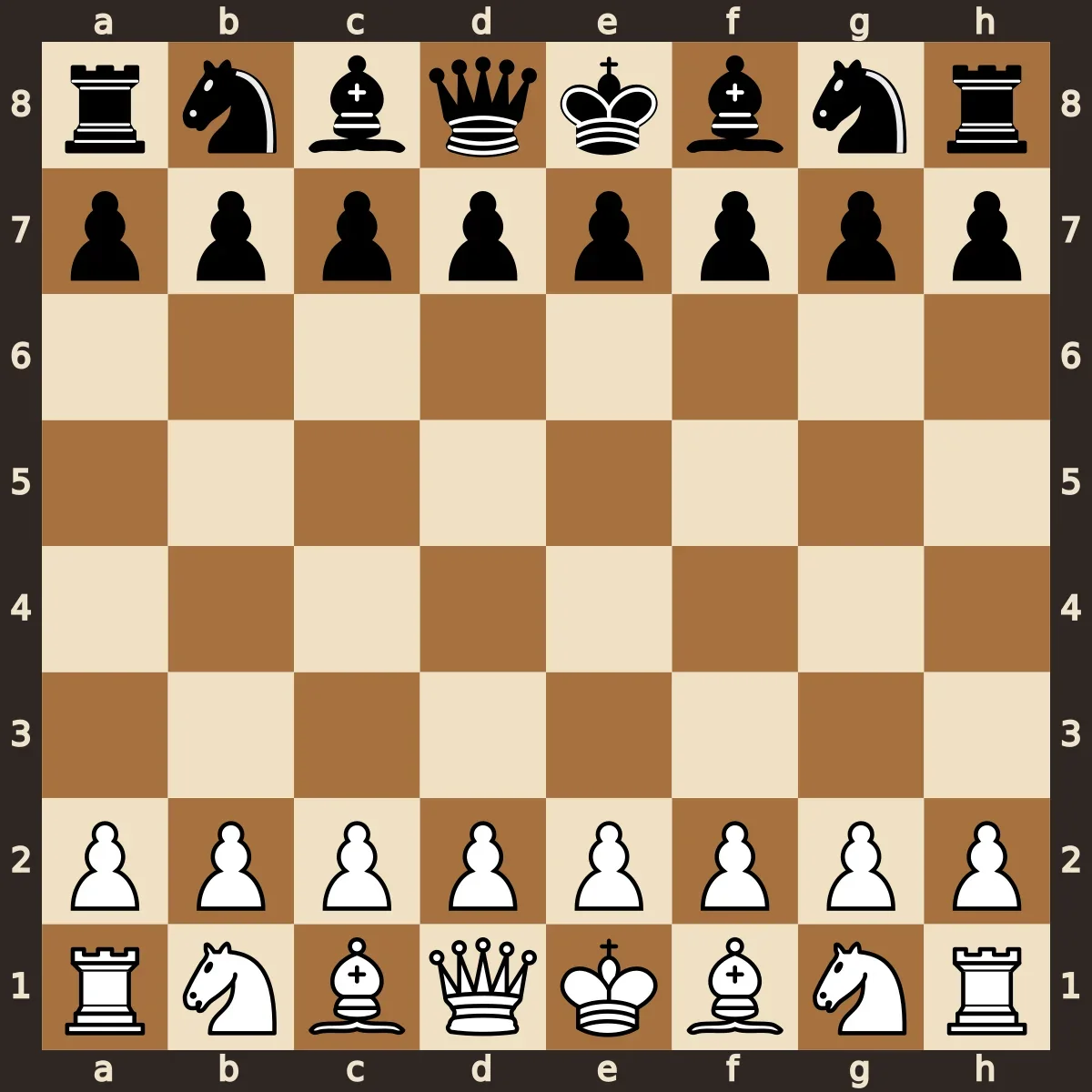
Practical Check
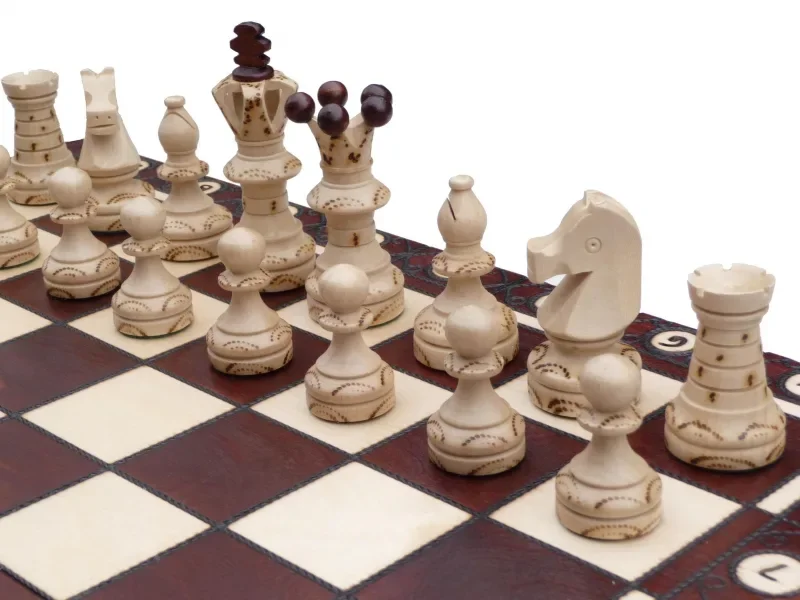
When buying a set, place the king on a square. If its base occupies about three-quarters of the square, the ratio is good. If it occupies less, the pieces are too small for the board; if it touches the edges of the square, they are too large.
Where Will You Play?
| Purpose | Square | King's Height |
|---|---|---|
| Tournament and club | 5–6 cm | ~9,5 cm |
| Home, family game | 4–5 cm | 7–9 cm |
| For children | 4–5 cm | 7–8 cm (light, durable pieces) |
| Travel | 2–3 cm | magnetic or pegged small pieces |
Worth Remembering
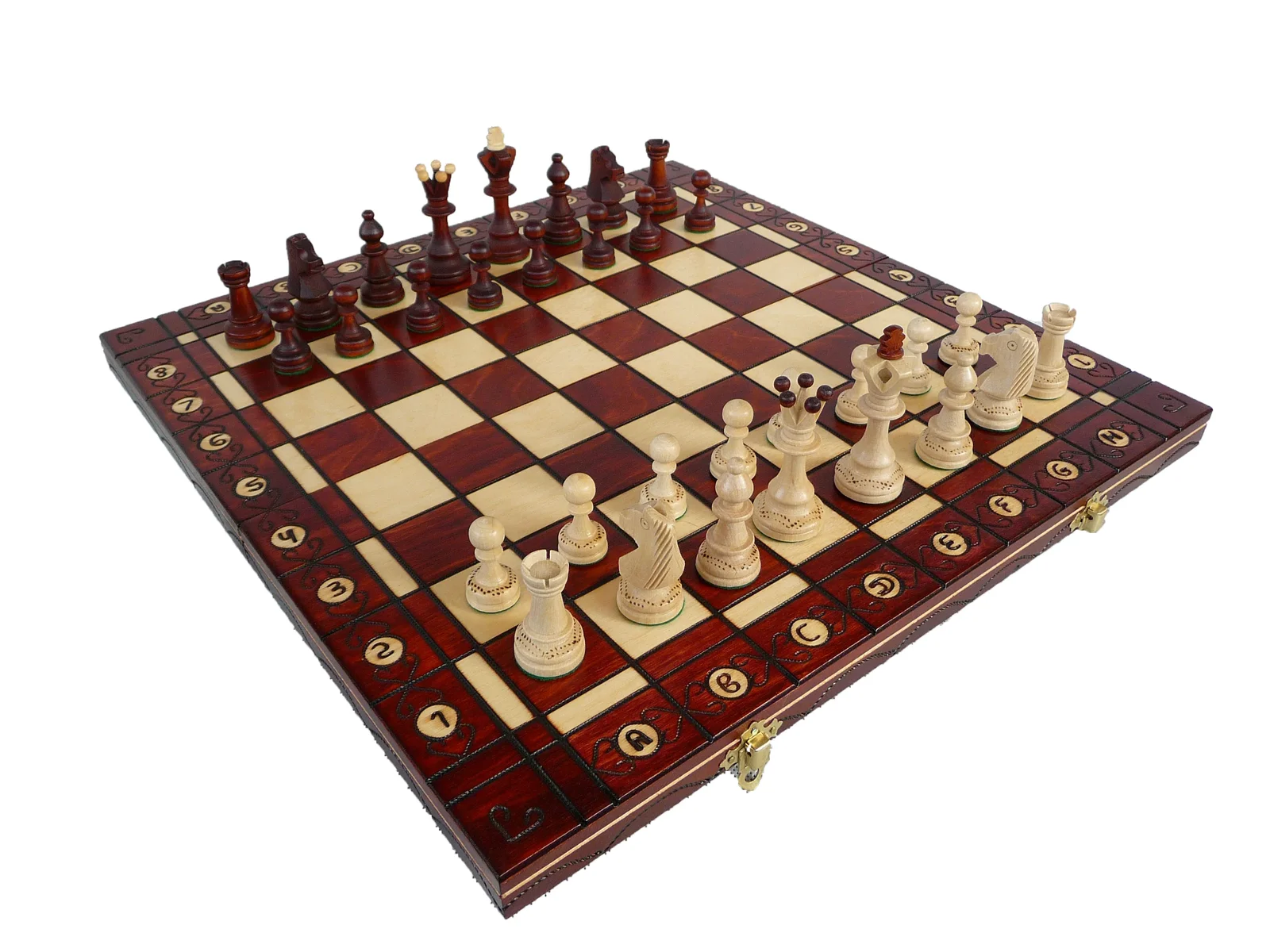
- The overall size of the board is not the size of the square. 8 squares × 5,5 cm = 44 cm; with the frame, the board can be 48–55 cm.
- Box-board (folding board) is convenient for storing the set, but a flat, non-moving board is better for tournaments.
- Colors should be matte. Glossy lacquer reflects light and tires the eyes during a long game.
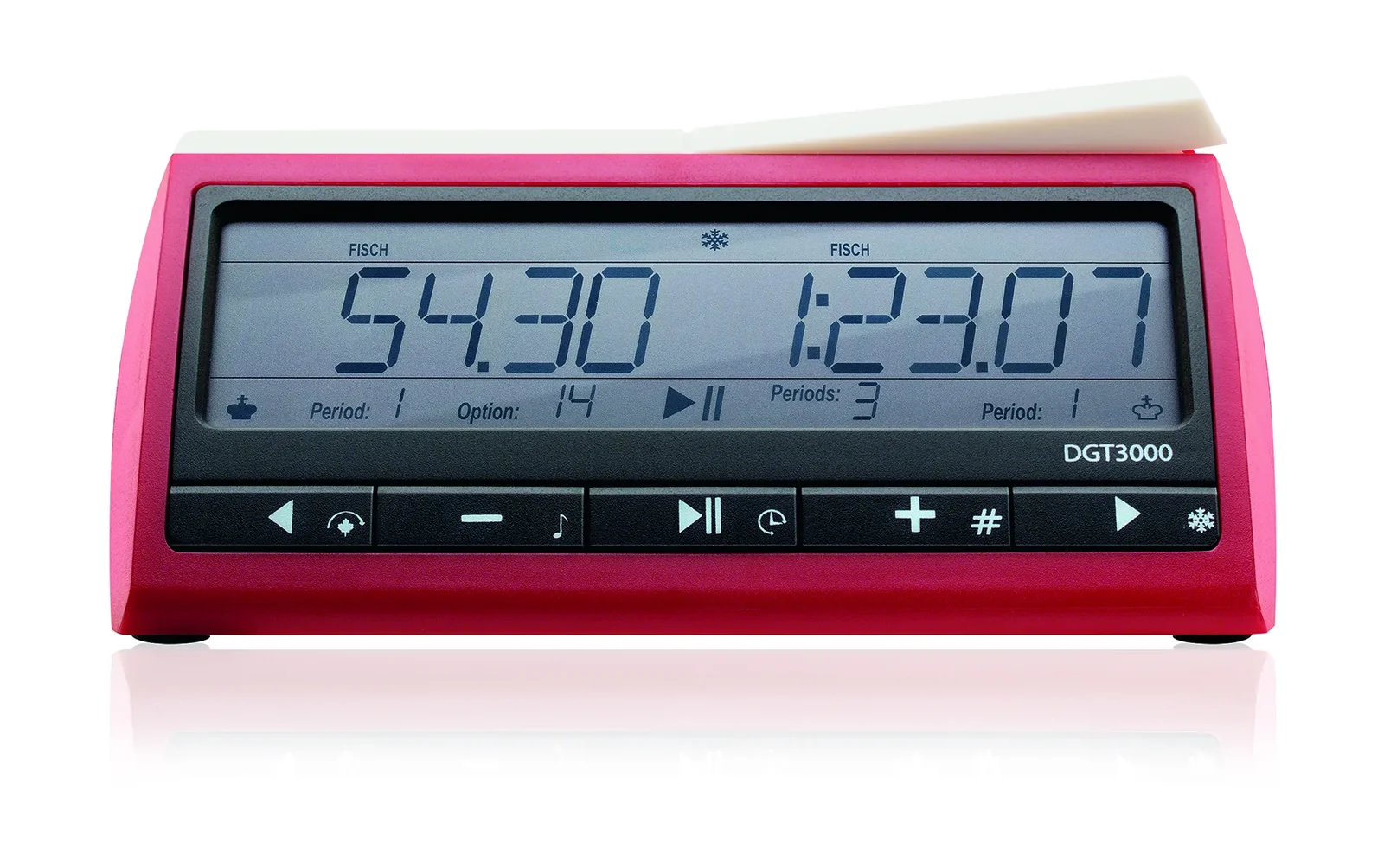
- Leave room for a clock. A chess clock also sits next to the board on a tournament table.
Choosing the right size makes the game more comfortable, pieces look familiar, and the transition to tournaments causes no difficulty.