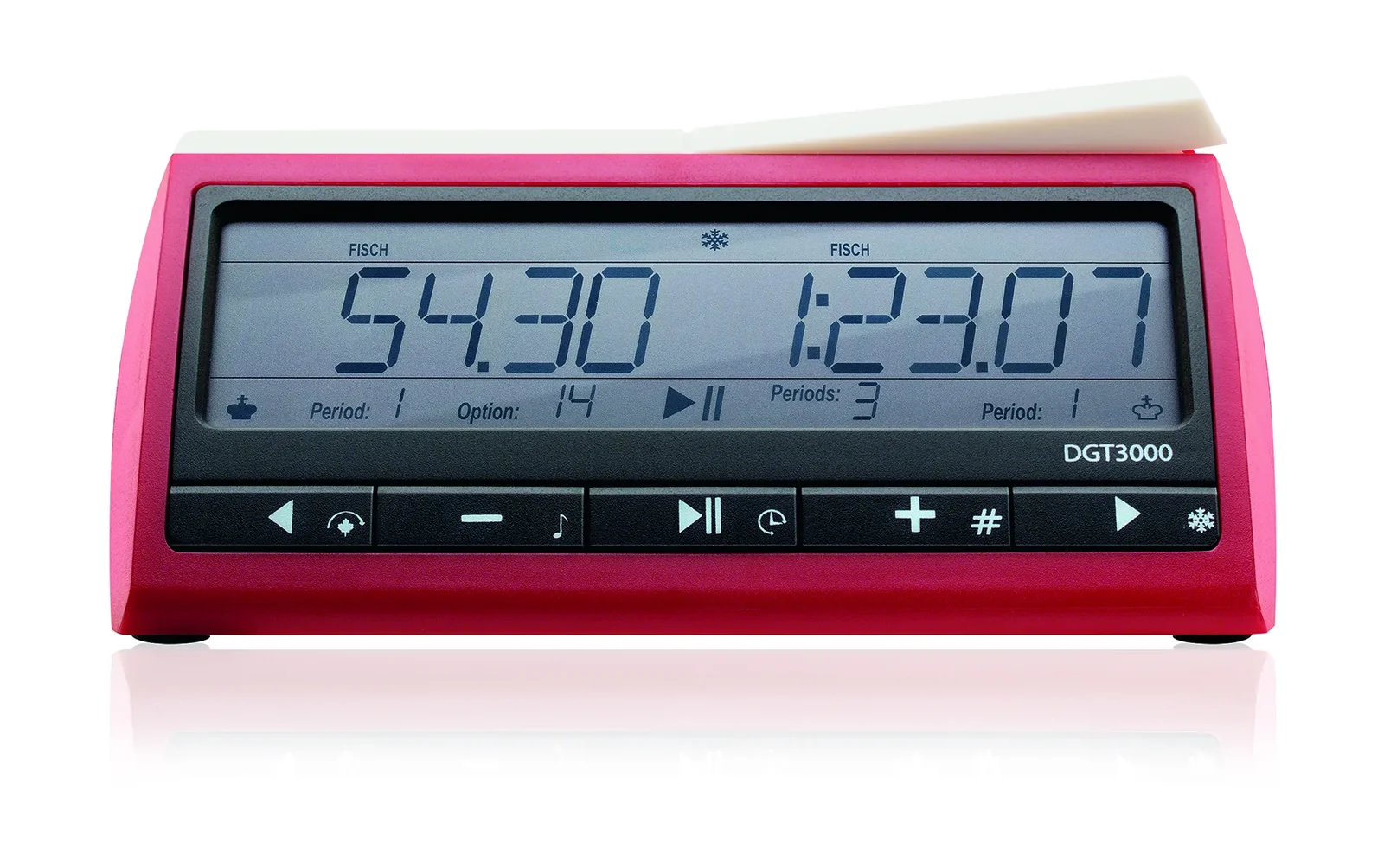
Today it is hard to imagine a tournament without a chess clock. But once upon a time, players could spend hours thinking over a single move — and some used this to exhaust their opponent.
The Era of Hourglasses
In the mid-19th century, hourglasses were used to measure time. This method was imprecise and very inconvenient for arbiters, but the idea that "thinking time is limited" was introduced to chess for the first time.
1883: The First Mechanical Clocks
Chess clocks were first widely used in a tournament in 1883 in London. Thomas Bright Wilson from Manchester proposed the idea of combining two clocks into one mechanism: when one player's clock runs, the other's stops. This simple principle remains unchanged to this day.
The Digital Revolution and the Fischer Increment
The first digital chess clocks were created in 1970. The biggest change was made by world champion Bobby Fischer: in 1988, he applied for a patent for a clock that added extra seconds to a player after each move. This mode was first used in the Fischer–Spassky match in 1992 and quickly spread worldwide.
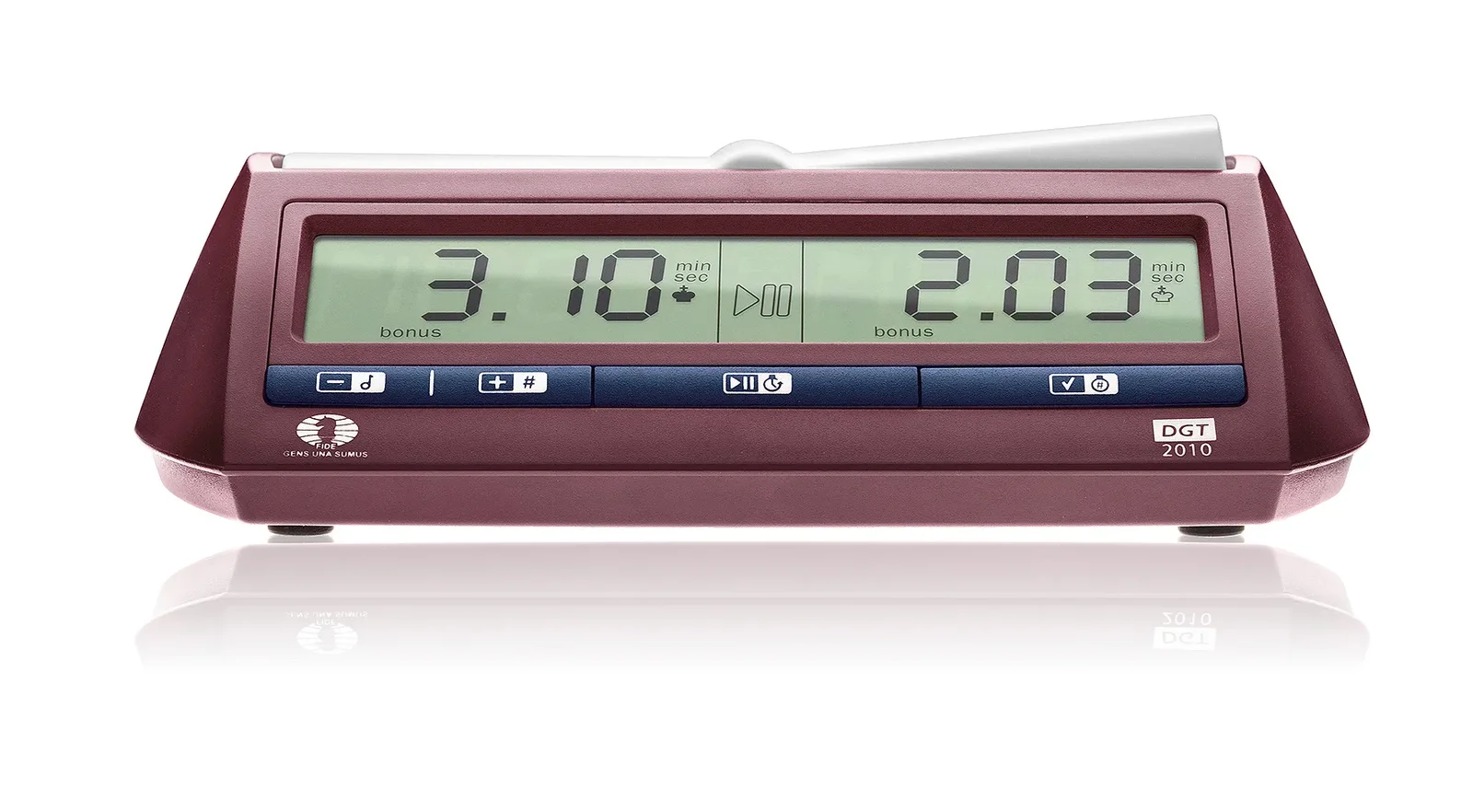
Basic Modes — What Are They For?
| Mode | How it works | Who it's for |
|---|---|---|
| Simple time (sudden death) | Each player has a fixed time; when it runs out, the game is lost | Casual games with friends |
| Fischer increment (increment) | A few seconds are added to the time after each move | Tournaments, blitz, and rapid |
| Delay (delay / Bronstein) | The first few seconds of each move are not deducted from the time | Those wanting to reduce time pressure |
Most Common Time Controls
- Blitz: 3 min + 2 sec or 5 min + 3 sec.
- Rapid: 15 min + 10 sec.
- Classical: e.g., 40 minutes for the first 90 moves, then 30 minutes; plus 30 seconds added per move.
What to Look For When Choosing a Clock?
- Fischer and delay modes available? If you are preparing for tournaments, this is a must.
- Move counter — convenient for tracking the 40th move in classical time control.
- Buttons should be quiet and sturdy: in blitz, clocks are pressed frequently and hard.
- Battery — usually standard AA batteries; remember to keep spares.
A good clock changes the game: it teaches you to manage time and reminds you that every move has value.